Election 2026: Towards a Communities Policy for Wales
As Wales approaches the Senedd Elections in May, there is a significant opportunity to strengthen collaboration across sectors. Community groups across the country sustain vital social infrastructure, reduce isolation, and respond to crises with speed and empathy. These organisations deliver on the principles of the Well-being of Future Generations Act every day, demonstrating what is possible when partnerships are valued and supported. Yet collaboration remains inconsistent and is too often treated as an afterthought.
Why Communities Matter
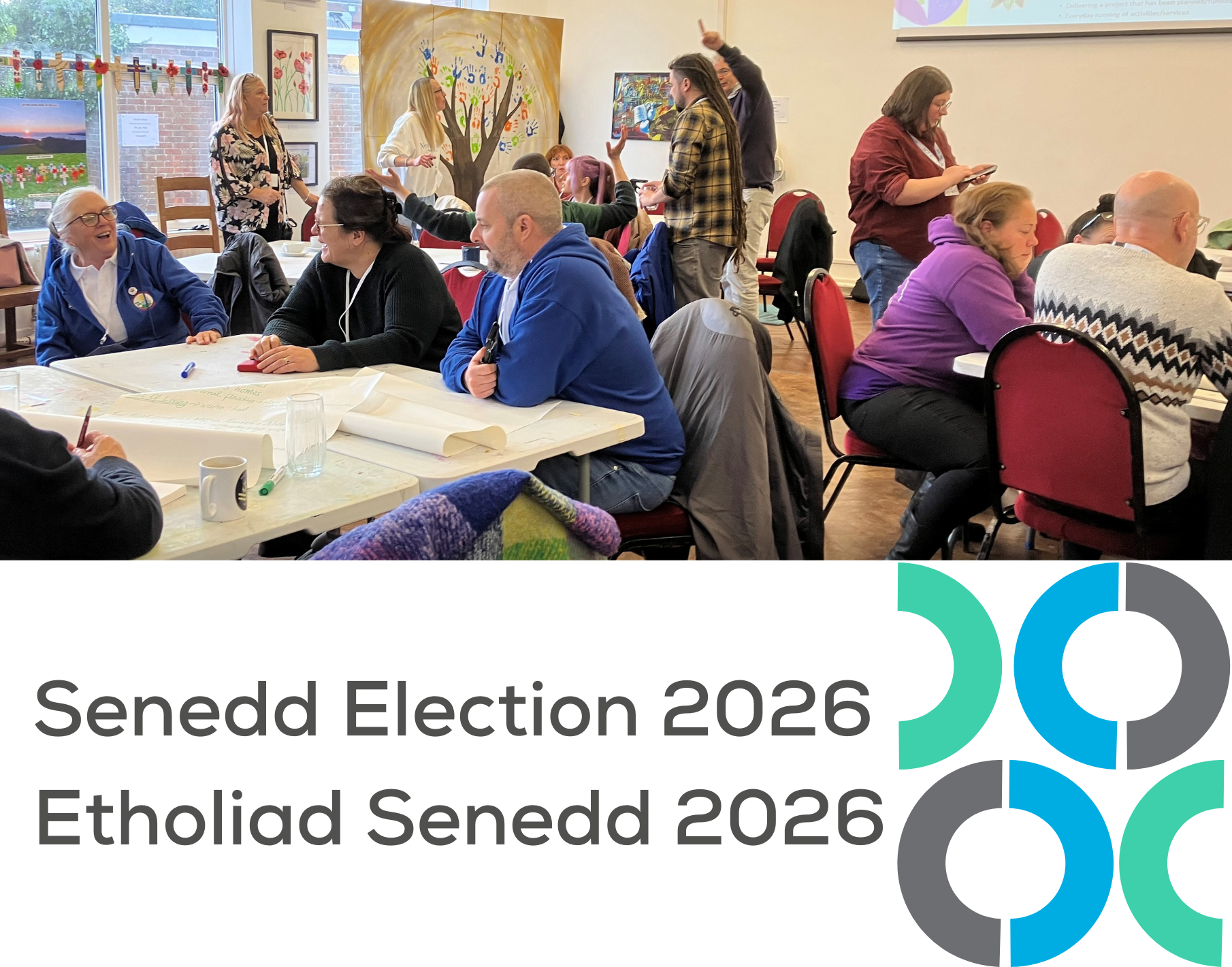
Communities are where people spend much of their lives, and what they offer has a major impact on quality of life and future prospects. Thriving communities, where inclusive activities are available for everyone, especially those with greater needs, almost always lead to better outcomes for residents. However, evidence shows that the communities which need these assets most often have the least access to them, resulting in poorer outcomes and reduced confidence and participation in democratic processes.
What Community Organisations Contribute
Across Wales, thousands of community-based organisations inspire volunteers and staff to tackle poverty, support education, improve mental health, engage and support young people and protect the environment. These organisations are a major, often under-recognised asset, strengthening wellbeing and social cohesion in ways that public services cannot.
Their growth reflects both necessity and ambition, filling gaps left by austerity and centralisation while creating local opportunities and assets that people value. However, some of the most disadvantaged areas have the lowest levels of community action, making targeted support essential.
The Current Challenge(s)
Collaboration between the public sector and community organisations remains inconsistent, often relying on individual relationships rather than shared frameworks. Differing cultures and institutional biases frequently overshadow common goals. As community organisations increasingly occupy spaces vacated by the public sector, recognition of this mutual dependency is limited. This has led to short-term, funding-driven interventions that strain community groups and risk undermining their sustainability.
[Public bodies] “have an armoured front. There is a lack of collaboration and trust.” (Community group in Wrexham).
The Opportunity Ahead
Public services are increasingly reliant on community organisations to support wellbeing. Relationships will be stronger and more effective if guided by a clear policy framework: a Communities Policy that sets out how government and communities work together. Such a policy should:
Recognise the varied contributions of communities to societal wellbeing.
Cut across policy silos and embed co-production as standard practice.
Simplify partnership arrangements to reduce duplication and waste.
Channel funding to where communities are best placed to deliver.
These steps are practical, cost-neutral, and transformative. Properly implemented, they will replace siloed thinking with people-focused approaches, ensuring that decisions reflect lived realities rather than administrative processes.
Why This Matters
Supporting community action is an intelligent investment in Wales’s social and economic future. By creating the right conditions for collaboration, policymakers, including the next Welsh Government, can unlock the full potential of community-led action, strengthen our social fabric, and deliver lasting improvements in health, wellbeing, and resilience.