
What I learned about evidence during my placement at BCT
We recently hosted Amelia, a now third year economics student at Cardiff University, for a two-week placement, focusing on our use of evidence and influencing. Here, she shares some reflections on her time with us.
“I’ll be honest, I went into this placement expecting ‘using evidence’ to mean numbers. I’m an economics student – indices, regressions, percentages, that sort of thing felt like the whole game to me. What actually caught me off guard was how much of the real, important work at BCT isn’t quantitative at all.
All things considered, the number-crunching side is impressive. The indices BCT uses (such as the Wales Community Asset index and the Wales Community Resilience index) pull together data on things such as civic assets and community connectiveness to show where infrastructure is weakest across Wales. This is used in practice through projects such as the Community Anchor Development Programme to decide who gets funded, which matched what I expected coming into the placement.
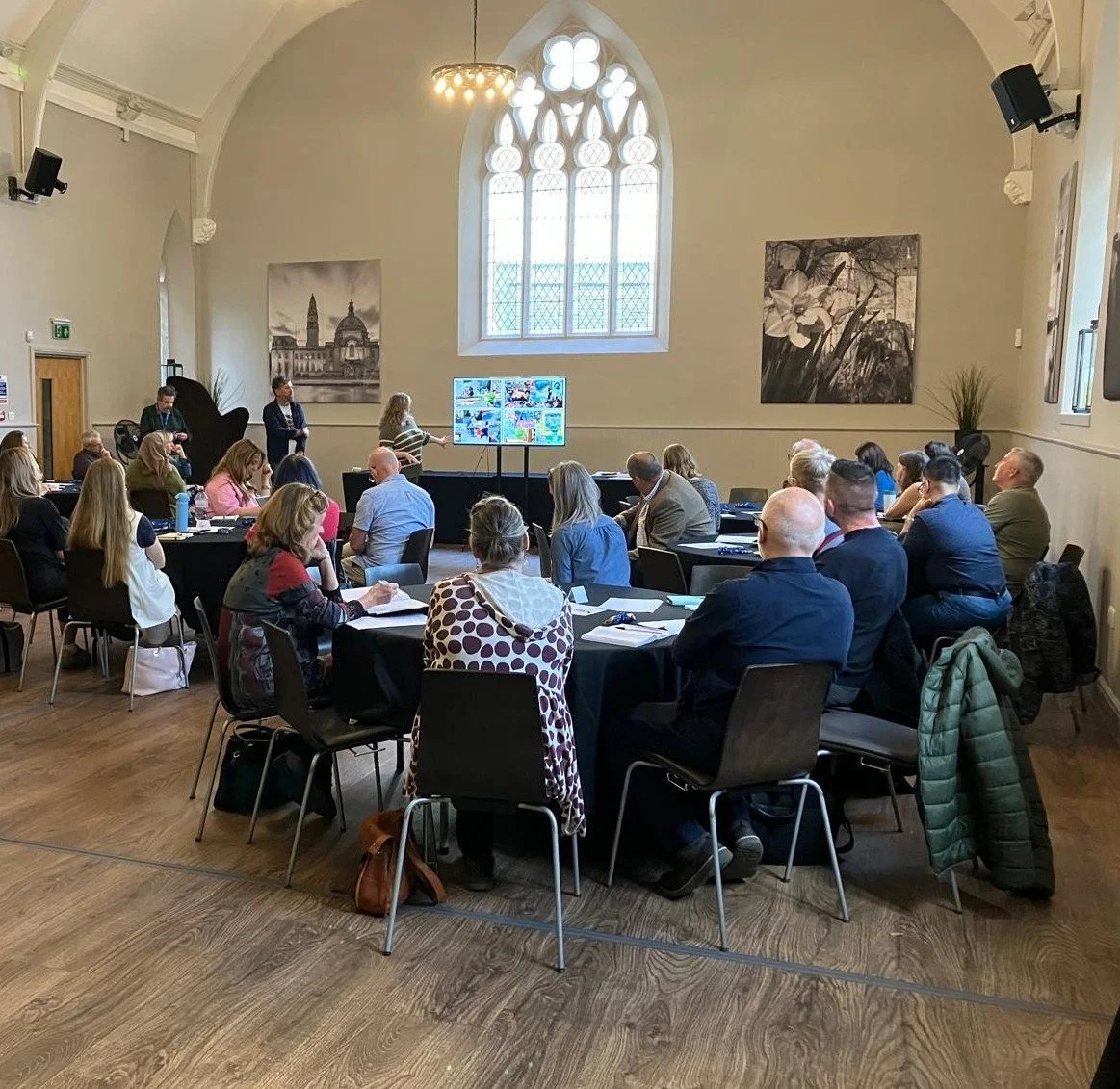
What I didn’t expect was to sit down in an evaluation meeting on that same programme and see reports on honest conversations, rather than a spreadsheet. It was built out of interviews and real examples from involved organisations, and the part that surprised me the most was the honesty about what it couldn’t prove – the theme that it was early days, and there was no certain proof that the change was caused entirely due to the funding.
My gut reaction was that this should make the evidence feel weaker, but it ended up doing the opposite, it felt less like I was being sold the idea of the project, and more that I was reading the impacts it had had on people’s lives. Some of the most important things about whether a community organisation is genuinely stronger, or whether a network of organisations is holding together don’t just reduce to a number.
It’s easy to lose sight of that behind the data, but every one of those numbers is standing in for something real. A better community resilience score means people have somewhere to go and someone to check in on them. Behind the £20,000 in savings at one community leisure centre is a free kids’ drama club that wouldn’t otherwise exist. Behind a small flexible grant is a food bank that a community built for itself out of a breakfast morning. This is ultimately what the evidence is trying to protect and grow – not the numbers themselves, but the impact they can make to someone’s day-to-day life.
So, I’m leaving this placement thinking about ‘evidence based’ work much more differently than when I arrived. I used to think it meant turning everything you could into a statistic. Now I know it’s about knowing exactly what your numbers can tell you, and finding the rest of the answer elsewhere, even if that somewhere else is a conversation, rather than a dataset.”