Building stronger communities starts with stronger organisations
What helps a community organisation thrive over the long term? Funding matters, of course, but experience tells us that resilience is also built through trusted relationships, strong leadership and having the space to think beyond the next funding deadline.
The interim evaluation of the Community Anchor Development Programme (CADP) provides some insight into what helps organisations become stronger, more resilient organisations.
Across Wales, community anchor organisations supported through the programme are becoming stronger, more confident and better equipped to support the people and places they serve. The findings offer valuable lessons, not only to the organisations involved, but for anyone interested in how communities can be strengthened in the long term.
Community organisations are often expected to tackle some of society’s biggest challenges, from poverty and isolation to wellbeing and community cohesion. And yet, many operate in an increasingly challenging environment, characterised by short-term funding, rising demand and limited capacity.
In 2024 we launched the Community Anchor Development Programme (CADP) which took a different approach. The programme focuses on what organisations need with multi-year flexible funding being granted to 11 organisations: each organisation receives £150,000 over four years to invest in its own priorities.
Just over halfway through the programme, we're already seeing encouraging signs of progress. Organisations report they feel better equipped to plan ahead, support volunteers and make decisions with confidence. Behind the scenes, governance, systems and leadership are becoming stronger too, helping create firmer foundations for the future.
It highlights another distinctive feature of the programme: trust. Funded organisations repeatedly described the value of being trusted to decide how funding should be used based on local priorities and changing circumstances; organisations were given the flexibility to respond to opportunities, adapt plans and invest where support was most needed. Organisations reported feeling empowered to make decisions, take ownership of outcomes and focus on meaningful community impact.
Another theme emerging from the interim evaluation is the value of creating “breathing space”. The organisations describe how CADP funding has reduced the pressure of chasing other funding programmes and grants. Greater financial stability has given organisations the opportunity to step back, reflect and focus on longer term plans. For example, Cwmni Bro report:
A central change enabled by CADP funding has been the creation of time, particularly time to build relationships, develop trust, and support the local network of organisations more effectively. Previously, the need to secure and deliver externally funded projects placed constraints on how much time could be dedicated to these activities. In contrast, CADP funding has allowed Cwmni Bro staff to step back from a constant cycle of bidding and delivery and instead invest in the relationships and processes that underpin community-led development.
This has led to some organisations strengthening governance structure and improving internal systems. For others, it created opportunities to recruit key staff, improve volunteer management or develop plans for long-term sustainability.
At the heart of CADP is the simple idea: resilient communities need resilient organisations. Community Anchor Organisations are often much more than service providers. They can be local hubs, places where people meet, access support, volunteer, develop skills and build relationships.
The interim evaluation found evidence across several areas of organisations’ capacity including:
· Stronger volunteer recruitment, management and leadership,
· Improved volunteer wellbeing
· Increased skills and confidence amongst staff, trustees and volunteers
· Stronger governance and more effective internal systems
· Improved leadership and greater distribution of responsibility
· New networks and partnerships that provide access to knowledge, support and opportunities.
These changes may sound internal, but we are starting to see signs that the increased organisational capacity is translating into wider benefits to the community. We are still at an interim stage, so many longer-term outcomes are continuing to emerge – however some of the changes organisations have reported include:
· Expanded or improved services
· Reaching new groups
· Developing stronger partnerships
· Coordinating activity with other organisations
· Making better use of community assets
· Responding to changing local needs.
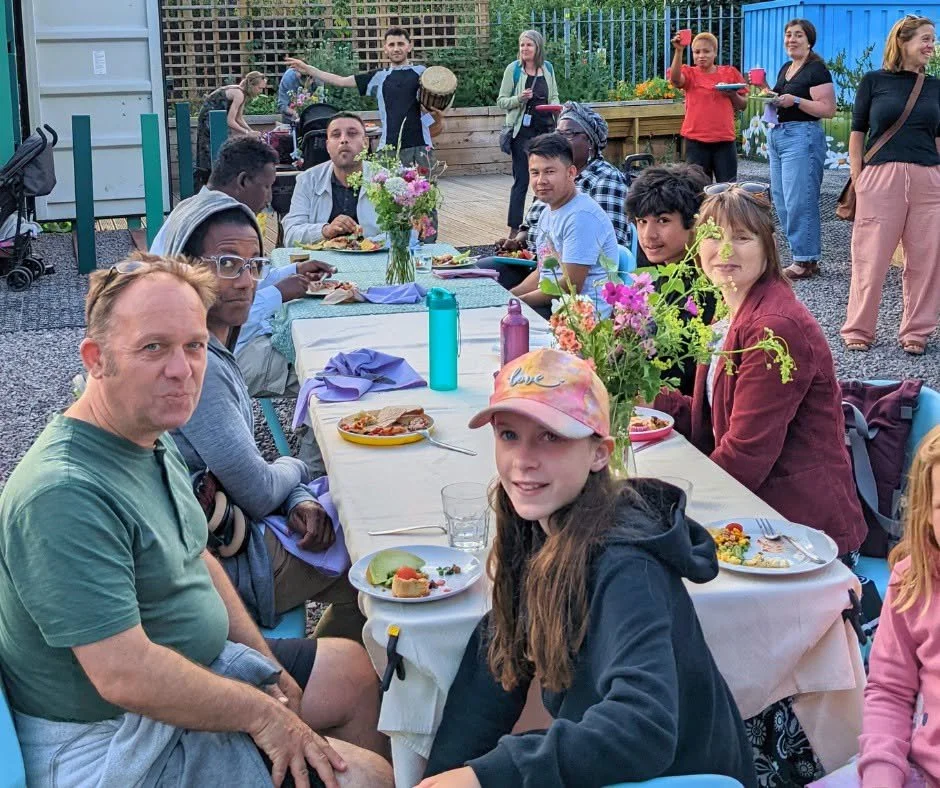
Another welcome surprise has been the strength of the relationships developing between organisations. Through peer visits and shared learning events, people have been able to exchange ideas, discuss challenges openly and learn from one another's experiences. This learning has already influenced decision-making and practice across the network. For example, Lee Gardens pool report:
With support from BCT, Lee Gardens moved towards a lower-risk, community-owned solution. On a fact-finding trip to the site of fellow CADP fundee Green Squirrel, the Lee Gardens team were taken by Green Squirrel’s shipping container building, and decided on a new approach based on modular, shipping-container units. They described seeing the shipping containers as a “wow moment,” and knew that they had found the solution to their problems.
The network has evolved beyond sharing successes. Organisations increasingly feel able to discuss challenges openly, demonstrating a level of trust that allows for genuine learning and collaboration.
The findings are encouraging, but the evaluation does not ignore the challenges facing community anchor organisations. Many continue to experience pressures relating to funding, volunteer recruitment, physical buildings, growing demand and relationships with statutory partners. Some organisations are managing ageing buildings; others are navigating growth and the additional pressures that come with expanding services and teams.
Measuring impact also remains challenging. Many organisations are still developing their systems for collecting evidence, while the most significant community level changes may take time to become fully visible. This underlines an important point: strengthening and developing organisations is not a quick process, it takes time.
What can we learn from CADP?
While the programme is only halfway through its journey, the evaluation points to several important lessons. Investing in organisational development matters. Governance, leadership, systems and relationships may not always be the most visible aspects of community work, but they are often the foundation for which meaningful change belongs. One of the clearest lessons so far is that organisations achieve more when they are given the freedom to decide what support they need, rather than being asked to fit their work into a predefined project. The relational aspect of the funding is important, the combination of financial support, tailored guidance and peer learning appears to be creating conditions where organisations can develop with confidence and purpose.
Looking ahead
There is strong evidence that CADP is strengthening the capacity, resilience and sustainability of the 11 community anchor organisations involved in the programme. The combination of flexible multi-year funding, tailored support and peer learning appears to be creating valuable conditions for change.
There is still much to learn in the second half of the programme, the longer-term impact on the community will take time to emerge, yet the evidence suggests that when organisations are trusted, supported and given the time and space to grow, the benefits extend far beyond a single project or service.
As the programme continues, the key question will be: what more could be possible if long term flexible trust-based funding became the norm rather than the exception?